
I saw it for the first time in a friend’s yard in Alpine, an airy-looking bush covered in tiny white flowers. It was bee-brush, my friend told me, and it’s one of those plants that needs virtually no care. That was what I liked to hear.
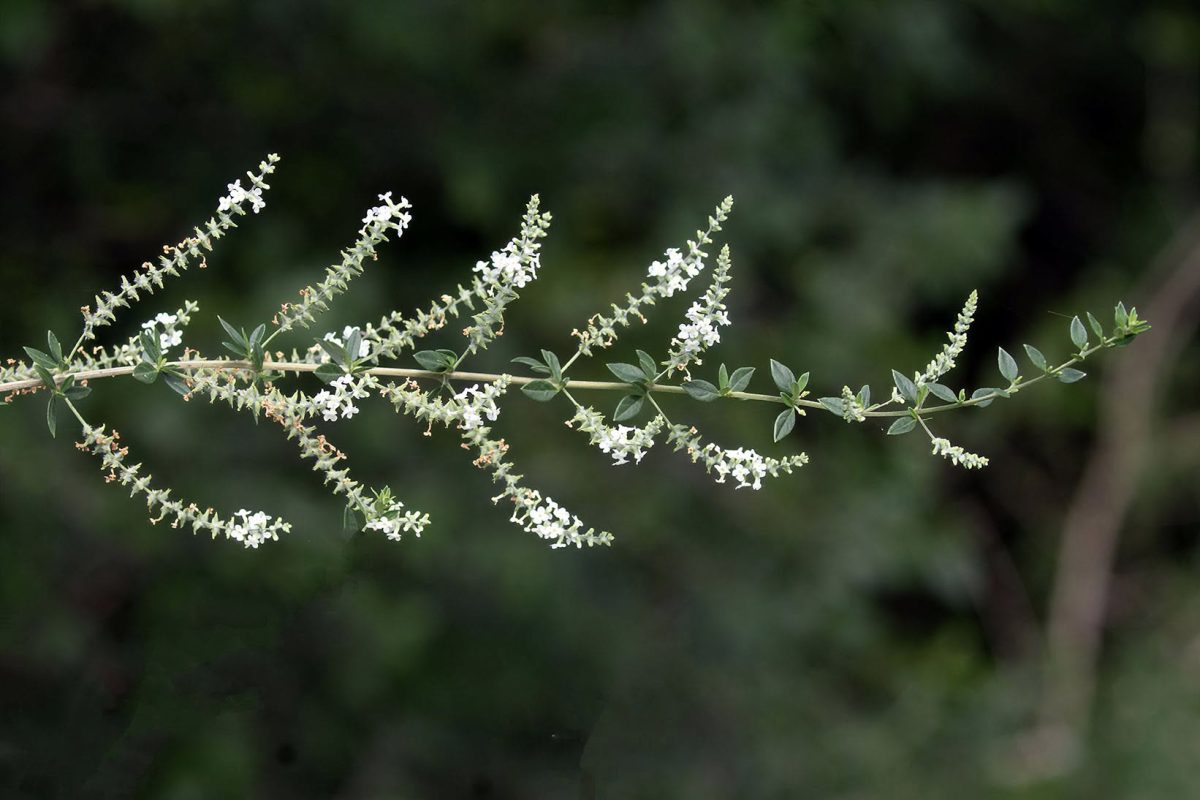 Would this West Texas beauty grow in my yard in San Marcos? As I would quickly learn from my research, the answer was a definite yes.
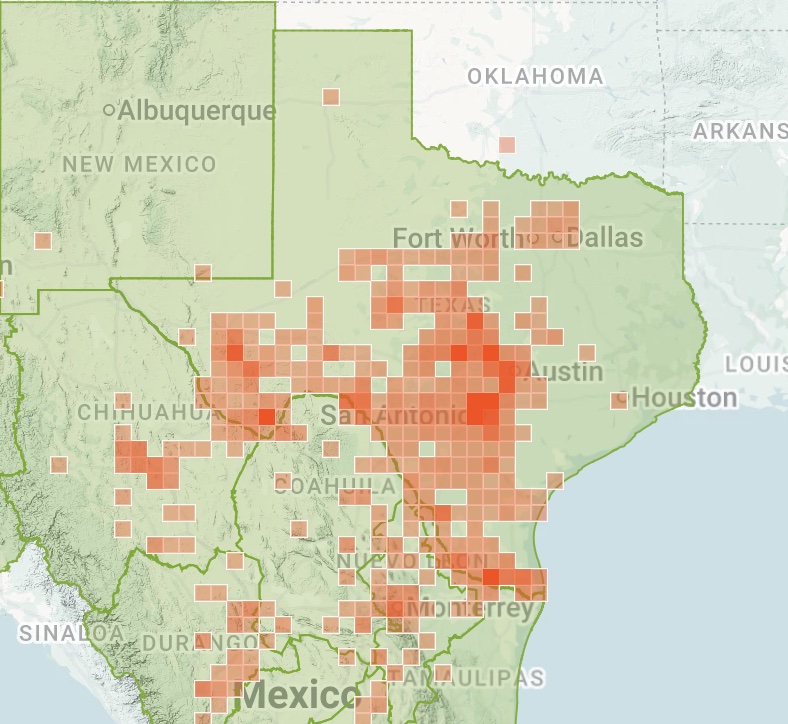
Indeed, this member of the verbena family occurs in rocky soils, sandy soils, desert grasslands, and open woods—in short, pretty much everywhere. The species distribution map on iNaturalist confirms that.
Also known as whitebrush, bee-brush (Aloysia gratissima) is one of those plants that deserves to be used far more often than it is. In addition to being flexible in terms of soil type, it can be maintained as either a shrub or a small tree, growing to about 10 feet. Though it prefers sun, it can tolerate part shade, and while it likes moisture, it doesn’t require supplemental watering.
As the online horticultural resource Gardenia points out, “Whitebrush is a fragrant native shrub known as much for the smell of its flowers as for their appearance. . . . The fragrance is famously strong. On still evenings, the vanilla like scent can carry across a yard, attracting clouds of bees by day and night flying moths after dark. In native rangelands, beebrush bloom is one of the classic cues that honey producers and wildlife watchers look forward to each year.”
In the wild, bee-brush can form loose thickets, a habit that can easily be taken advantage of in the home landscape to create a hedge or screen. I prefer using it as a specimen plant, a cloud of white when conditions are right. And they were certainly right this year. Particularly after the abundant rains in July, my two bee-brush plants, which occupy sunny spots in the front yard, have been spectacular.
In addition to being an excellent honey plant, bee-brush is attractive to a variety of pollinators and other wildlife. Birds appreciate it for its fruit, a schizocarp or dry drupe that splits into smaller segments, each containing a seed. Bee-brush also offers cover for wildlife, including birds that nest there. Though it’s deer-resistant, and actually toxic to cattle and horses, this plant is a food source for some animals.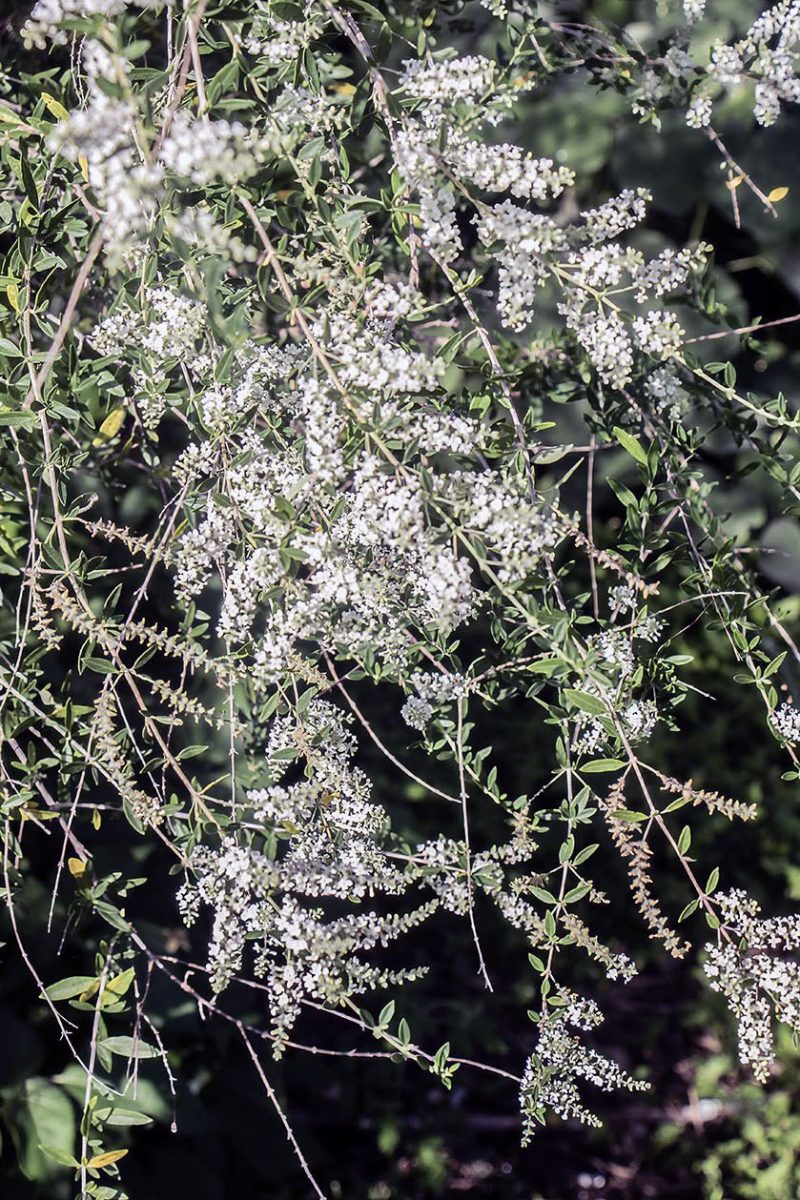
Is there a downside to bee-brush? Not enough of one to make me regret planting it. During drought and harsh winters, bee-brush can look a little straggly; ordinarily deciduous, the plant does shed its leaves in certain situations. More concerning for a gardener is the fact that bee-brush is pretty prickly. It doesn’t have thorns, but its stems are stiff and terminate in sharp, spine-like tips. Between these barbs and the densely branched nature of the plant, I’ve come away from pruning my bee-brush with quite a few scratches, not to mention the experience of having my T-shirt caught on a branch.
These drawbacks are nothing, however, compared to the benefits and pleasures of growing bee-brush. For a quick look at the plant and a little more information about it, click on this video from Barton Springs Nursery in Austin.