
Most people I know think of spring in the Hill Country as the best season. The bluebonnets, the Indian paintbrush, the gaillardia, the pink evening primrose—together or alone, they’re all a source of amazement. But for me, the most magical season is fall, the season I find most surprising.
Granted, autumn in Texas can’t compare to fall in the Rockies or New England. Even considering the show put on most years in Lost Maples, we simply lack the drama that comes with cooler weather.
That said, I find the shift from summer to fall to be downright exhilarating. With even an inch or two of rain, things that I thought were dead pop up, as if to say, “Ahem, we’re not done yet.” Other plants, my Turk’s cap for instance, offer one last bloom before frost—and they make it a good one.
I’m grateful not just for Turk’s cap, but also for a host of other fall bloomers: frostweed, goldenrod, sunflower goldeneye, fragrant mistflower, and shrubby boneset, all of which are either in flower or about to flower in my yard.
But there are others that you might have missed.
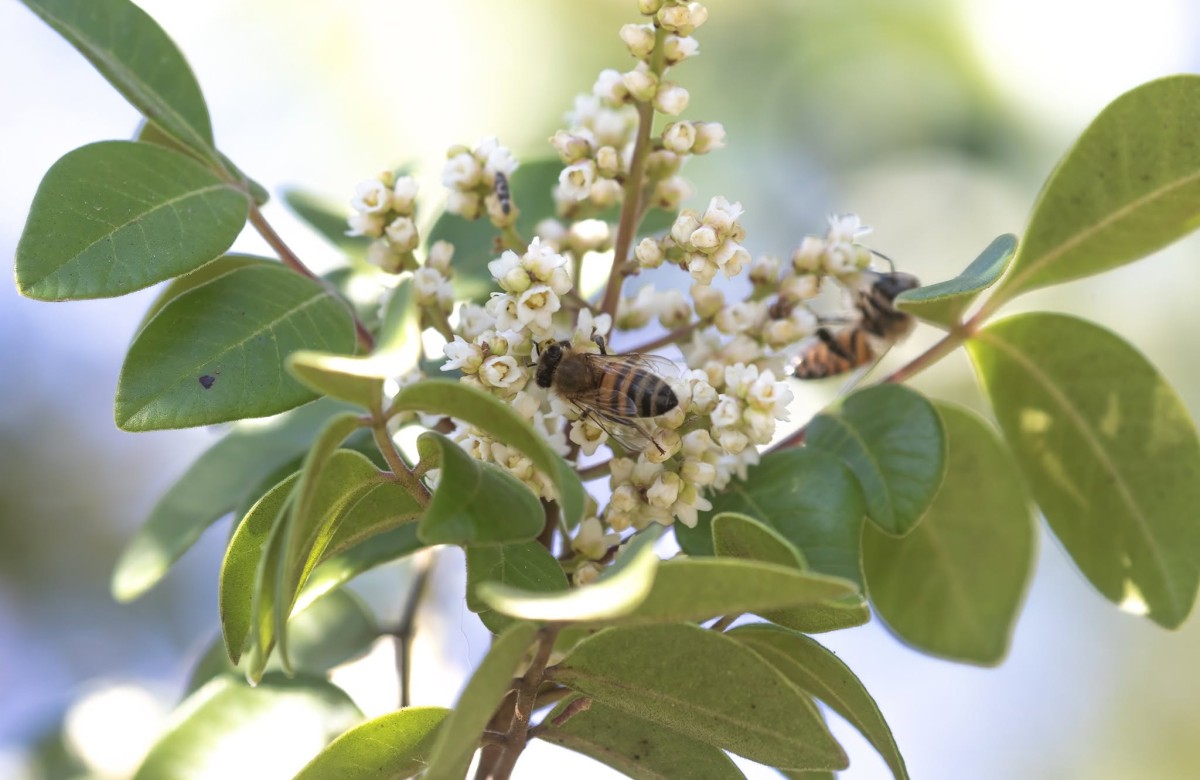
Evergreen sumac: This small to medium-sized shrub or tree—reaching about 10 feet, if not cut back—is both tough and beautiful. It can grow in sun or part shade, doesn’t require watering, and isn’t picky about its soil. It’s unfazed by the Texas heat and has relatively few pests.
What makes it special, though, is the profusion of small white flowers that appear in late summer/early fall. I didn’t realize my neighbor’s trees were blooming until I heard a buzz while walking down her driveway recently. When I stopped to find the source, I saw that her evergreen sumacs—she has several bunched together—were covered in bees and other pollinators. A little later, I made a point to look at mine and was delighted to see that it was blooming also. Not only that, but it was full of bees as well.
Ultimately, the flowers will give way to small red fruits, creating a feast for birds and other animals. These features, the white flowers and bright red berries, make the evergreen sumac a great replacement for non-native species, such as pyracantha. Here in Hays County, this sumac is at the western edge of its native territory. To find it growing wild, look for it on rocky bluffs or dry hillsides—or in the suburban yards of folks who have recognized it and left it to grow in peace.
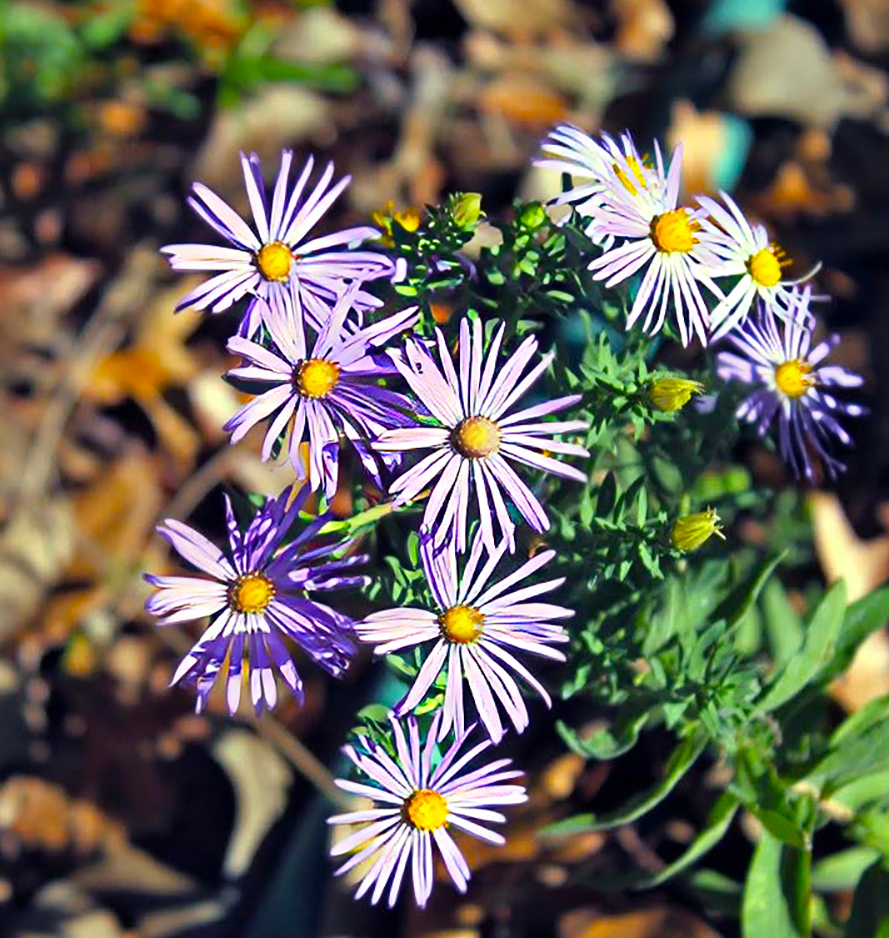
Fall aster: I often forget about this plant—until it blooms, that is. Although best known as “fall aster,” I still refer to it as Michaelmas daisy, which is how I first came to know it. The plant was so named because of when it blooms; its dazzling purple flowers typically appear in late September or early fall, right around Michaelmas, or the feast day of St. Michael the Archangel, September 29th.
This compact plant, which seldom reaches its maximum height of three feet, can grow in sun or part shade, moist or dry conditions, rocky or sandy soil. At my house, it’s located in a partly sunny bed in so-so soil, amid rock rose, rough leaf sunflower, and red salvia greggii. In the wild, this native can be found mostly on prairies from our region north. It’s definitely one to watch for.
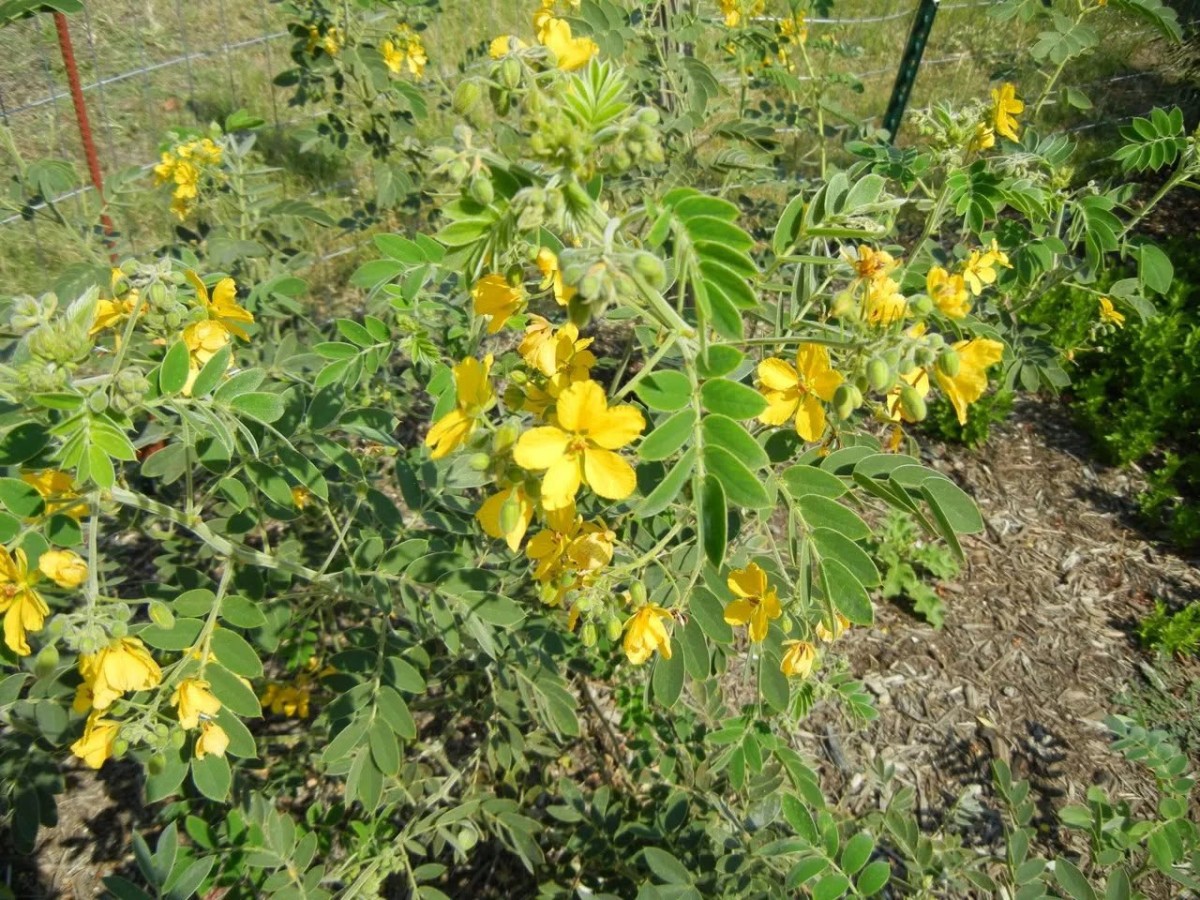
Lindheimer’s senna: It’s easy for people to see this fall bloomer and think “yellow bells”—and from a distance, that’s not a bad guess. Nonetheless, the masses of yellow flowers we’re seeing right now are more than likely Lindheimer’s senna. Partial to dry, rocky soil, senna is often found in the kind of wild areas where yellow bells are not; to find yellow bells growing wild, we would need to travel farther west.
Also called velvet leaf senna, this plant typically grows from three to six feet tall and is most striking when it appears en masse. It’s a larval host to sleepy orange and sulphur butterflies, attracts pollinator and nectar-feeding birds and insects when in bloom, and is a food source for birds and other wildlife when the seed pods burst.
American beautyberry: I’m including this one not because it’s overlooked, but because it’s one of the best reasons to love Central Texas in the fall. After blooming in late spring or early summer, this shrub, which can grow to six feet, begins developing the beautiful purple fruit for which it’s named.
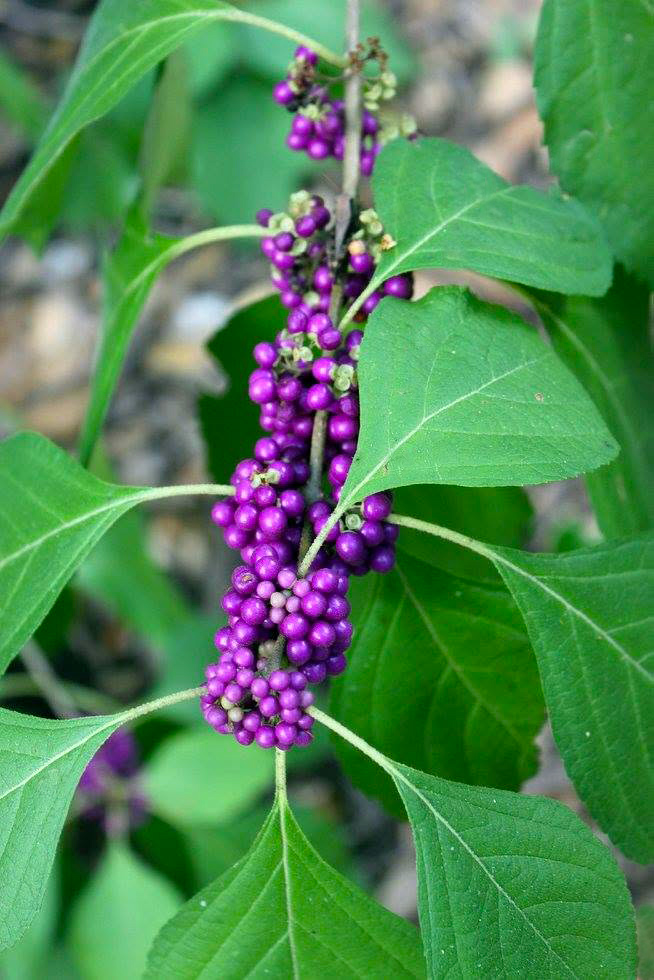
Because it likes a little shade and moist, rich soil, beautyberry can sometimes look a little sad in the middle of a hot, dry summer. But with a bit of rain, it can rebound and bring its fruit to maturity. According to the Native Plant Society of Texas-Clear Lake Chapter website, more than 40 species of songbirds, along with a number of small mammals, rely on the plant for food. In our area, those birds would include summer tanagers, Baltimore orioles, cardinals, brown thrashers, cedar waxwings, mockingbirds, and robins.
I didn’t realize it, but humans can also enjoy beautyberry fruit. “The berries are edible and when eaten raw they have a zesty taste but they can be cooked up into a jam or jelly and like elderberry can be made into a light rose-colored wine,” says the NPS website. Moreover, “In the old days, farmers would crush the leaves and place them under the harnesses of horses and mules to repel mosquitoes. They would also place them on themselves to repel mosquitoes and biting bugs.”
In the wild, American beautyberry is near the western edge of its range in Central Texas. Fast-growing, relatively disease-free, and easy to propagate, this stunning plant is another one to watch for.
Susan Hanson
Editor, The Loop