
They’re just the sort of plants that some eager person with a chain saw will go after: thorny (in two cases), nondescript, and, well, “wild.”
The names aren’t helpful either. Who would intentionally select something called “hog-plum”? Or “antswood”? Or “elbowbush”? Not the most attractive-sounding species in the compendium of Texas natives. Of the plants that follow, only the name “brasil” is appealing.
And yet, all of these are among the most desirable, if you’re thinking in terms of wildlife habitat. Each bears small, usually inconspicuous flowers in early spring, well before most showy plants display theirs. And equally important, each produces berries that birds and small animals love. If there’s any doubt, just consider how far from the mother plants the saplings spring up.
A little about each one:
-
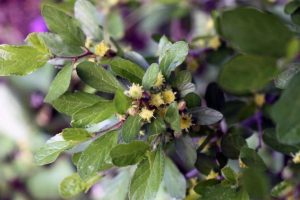
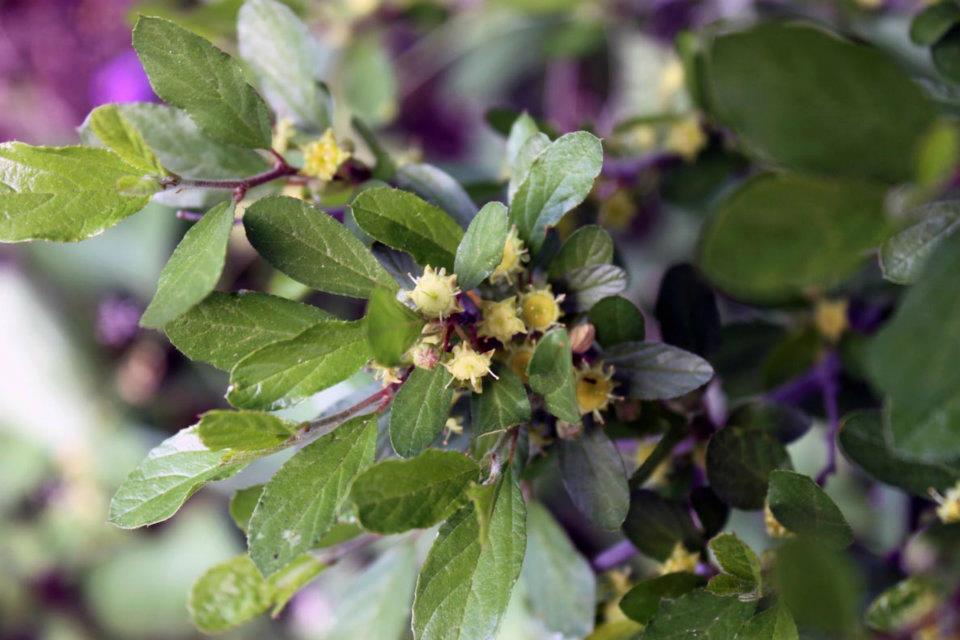
Hog-plum in bloom Hog-plum (Colubrina texensis)—Also known as Texas colubrina or Texas snakewood, the plant gets the latter name for its snakeskin-like bark, smooth gray with brown patches. The glossy leaves are small, and the yellow flowers even smaller. Reaching 4-6 feet in height, the plant can be pruned in the landscape without doing it any harm. It’s just best to do so before
it blooms in March or early April. The berries, which are also referred to as “nuts” because of their bark-like skin, are particularly popular with javelina—hence, the popular name. In Native Texas Plants, Sally Wasowski writes, “The entire shrub, I’m told, makes most landscape architects rhapsodic.” -
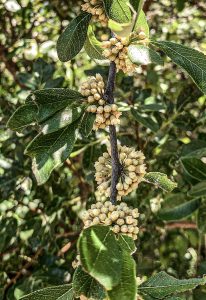
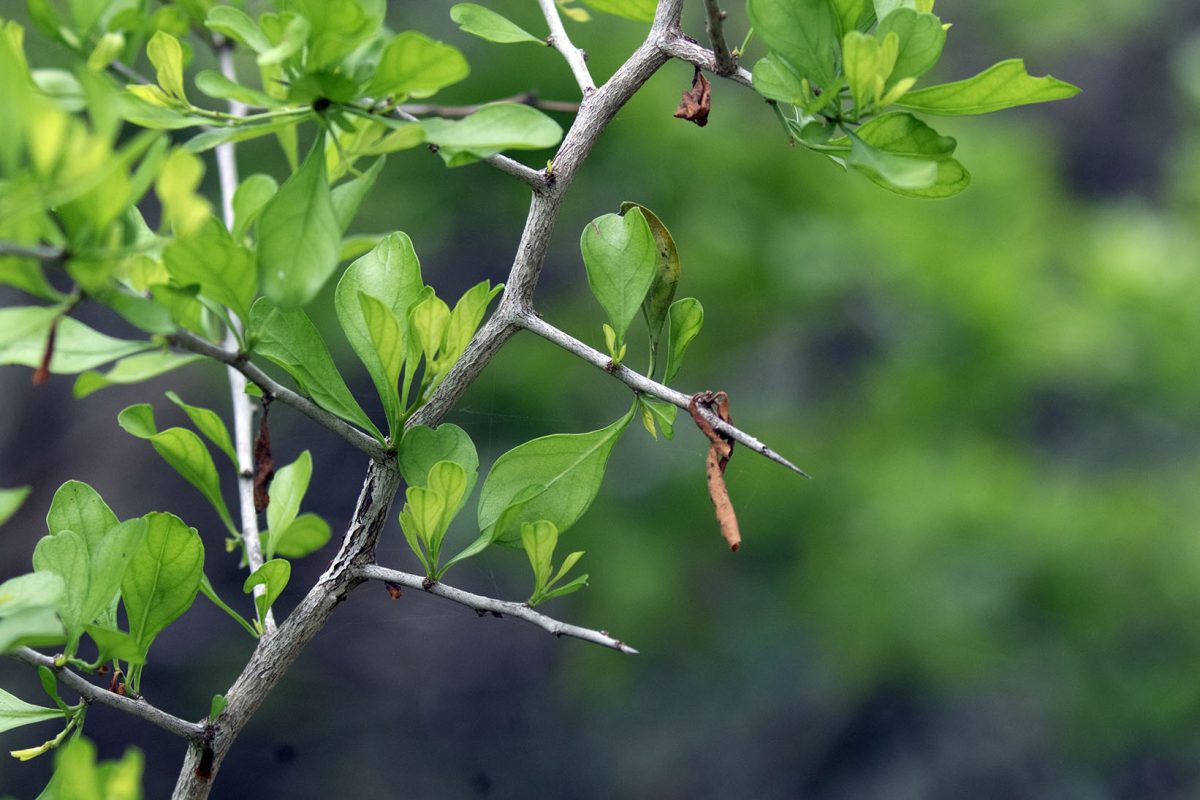
La coma blooming more than normal in an exceptionally good year Antswood (Sideroxylon celastrinum)—Better known as coma or la coma, this tree is most prevalent in the rangeland of South Texas but is also widespread in our area. Though it can reach a height of 30 feet, it’s typically an evergreen understory tree. Relatively short-lived, it spreads readily, often creating thickets that resemble small oak mottes. The only negative: la coma—also called “gum woollybucket’’—features incredibly sharp spines on the end of each twig. Even this can be a plus, though, given that the tree is ideal for nesting. Its white flowers, which are sometimes spotty and sometimes abundant, are a fragrant favorite among pollinators. Similarly, its small purple fruit are enjoyed by birds and other wild animals.
-
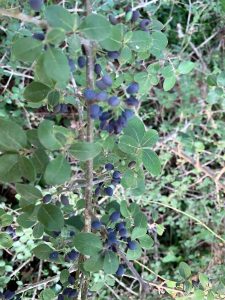
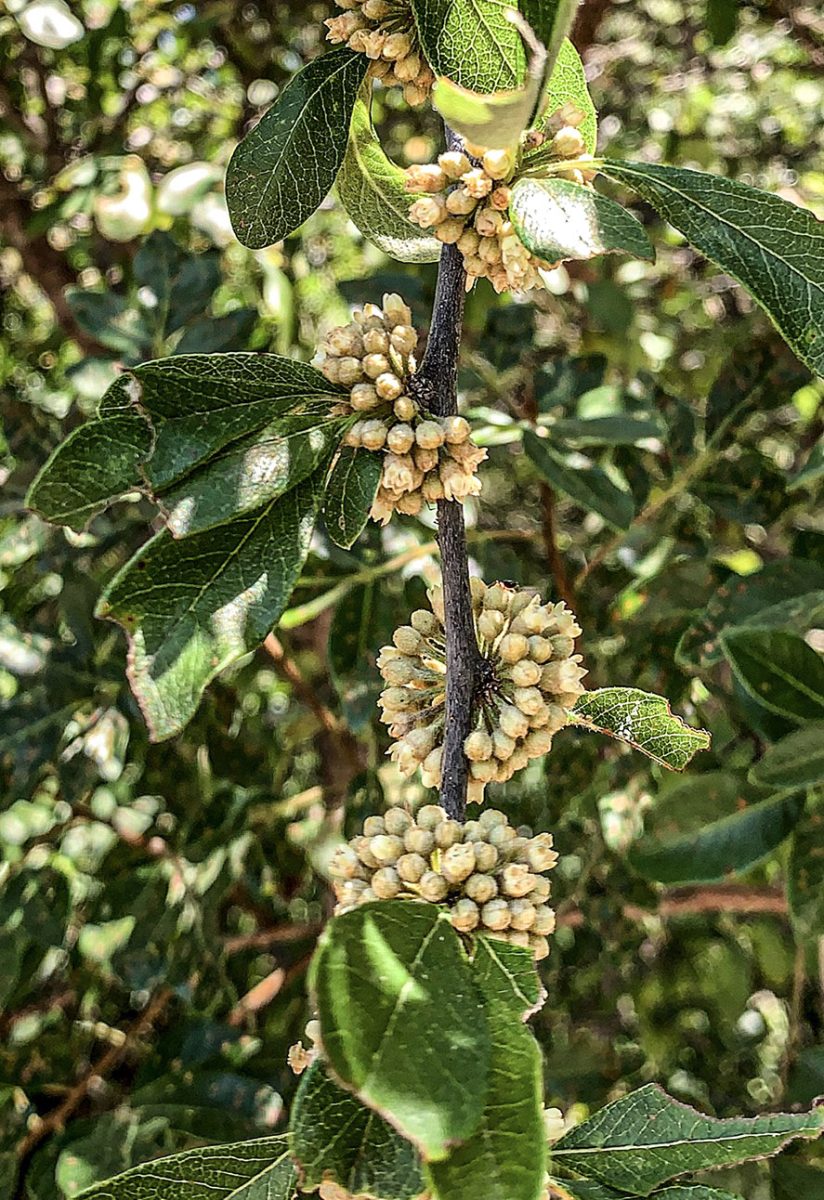
Elbowbush drupes Elbowbush (Forestiera pubescens)—Even before the mountain laurel blooms, elbowbush puts out its tiny yellow flowers, attracting pollinators that can find little else. These are
flowers you have to look for; indeed, it’s most often the bees that tell you the elbowbush is in bloom. Named for its wonky growth habit, with branches that extend at right angles from each other, this plant is highly adaptable. It can grow in sun or shade, in moist soil or dry. It can be cut back to form a hedge or left to reach a height of up to 15 feet. Dense and multi-branched, elbowbush makes an effective barrier, and thus offers good protection for wildlife. More importantly, elbowbush produces a small black drupe enjoyed by birds, small mammals, and deer. -
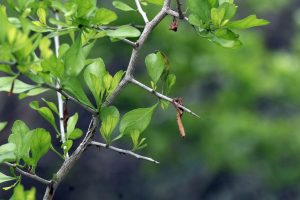
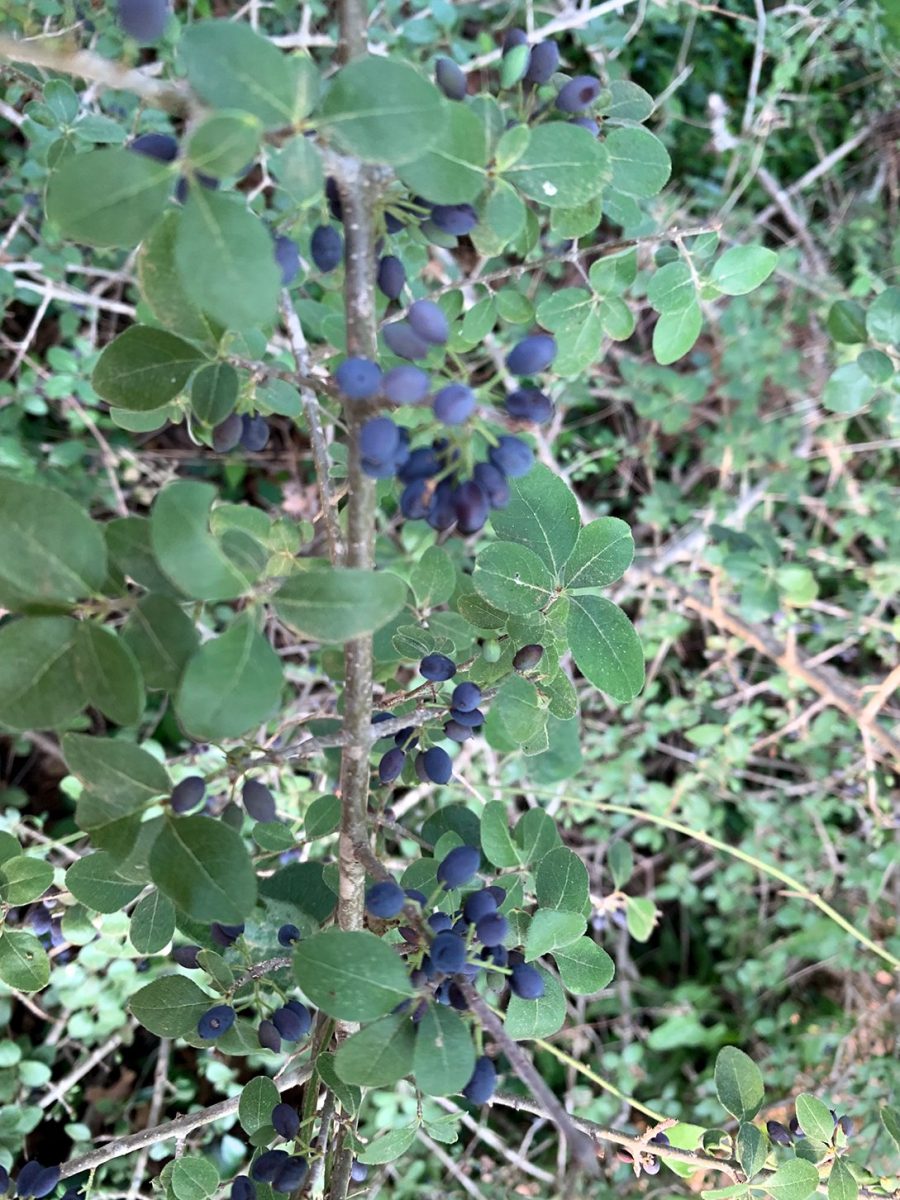
Brasil is known for its lime-green color and wicked spines Brasil (Condalia hookeri)—A semi-evergreen shrub or small tree, brasil is another thicket-forming species. Also known as bluewood condalia, it can reach 30 feet but typically tops out at 12 to 15. Like the other plants on this list, brasil can grow in a wide variety of environments—sun or shade, well-drained soil or clay. That isn’t the most notable feature of this species, however. In Native Texas Plants, Sally Wasowski comments on the “vibrant lime-green leaves” that appear in spring and also notes that “its memorable because it always seems to be in fruit. . . . It’s not unusual to find, on the same branch, fruits that range from pale green to yellow to orange to wine-red to blue-black.” The Plants of Texas Rangelands website adds, “Brasil’s forage value for wildlife is high. The fruit is consumed by a wide array of mammals, and Brasil is used as a nest site for birds as well as cover for both mammals and birds.”
What conclusions can we draw from these descriptions? Quite a few. Often ignored at best, or removed as “too thorny” or simply of no value, each of these species nevertheless possesses a number of important qualities: adaptation to a wide variety of soils, the ability to grow in sun or shade, drought tolerance, value to pollinators, production of fruit for birds and other animals, and the provision of habitat for all manner of wildlife.
* Because Christian Hawley uses the title “Trail Notes,” I have changed the name of this occasional column to “Along the Trail” to avoid confusion.
Written by Susan Hanson
Editor, The Loop